

How I Select Beauty Products for My Clients: A physician-informed, formulation-aware approach to makeup

Not “clean.” Not “toxic.” Just well chosen.
When I recommend beauty products to my clients in the Montreal area, I’m not trying to follow trends, nor to classify products as “good” or “bad.”
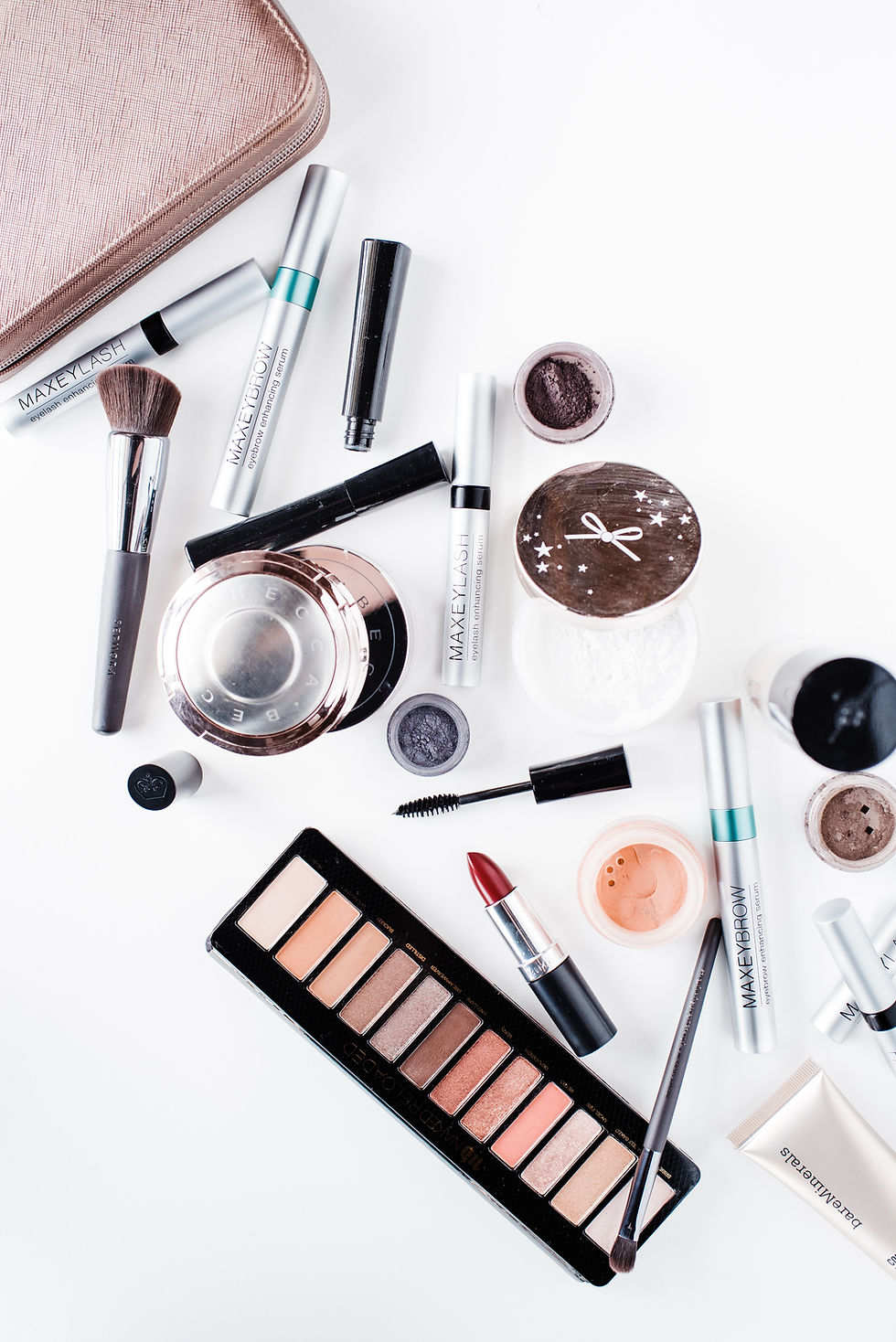
Most cosmetics available in Canada already meet strict safety standards. The real question is not whether a product is dangerous, but whether it is well formulated, well tolerated, and suitable for everyday use.
At Studio Écru, my role is not to restrict your choices—it’s to refine them, so you can confidently build a makeup routine that works for you.
What actually affects your skin (and what doesn’t)
In practice, the differences between products become visible over time. Not through extreme reactions, but through subtle effects: how the product feels on the skin, how it wears throughout the day, and how your skin responds with repeated use.
One of the few ingredients I consistently pay attention to is fragrance (parfum). It’s not inherently harmful, but it remains a common source of irritation, especially on the face and lips. When needed, I guide clients toward lower-fragrance options—without making this a rigid rule.
On the other hand, ingredients like petrolatum or silicones, which are often questioned, are actually very well studied and widely used. In most cases, they are safe, stable, and well tolerated.
Formulation matters more than labels
Two products can look identical but behave very differently once applied.
What makes the difference is how the formula is built. This has to do with the balance of oils and waxes, the dispersion of pigment in the product, and how the product adheres and blends to your skin. I have therefore tested all of the recommended products in-person, on myself, to ensure myself of their quality firsthand.

A well-formulated product feels intuitive. It blends easily, wears evenly, and requires less effort to achieve a polished result. This is why I don’t rely on labels like “clean” or “natural.” They don’t consistently reflect formulation quality.
Microplastics: safe for skin, worth considering environmentally
Some products use ingredients such as polyethylene, PMMA, or nylon to improve texture and wear.
From a health perspective, these ingredients are considered safe. They remain on the surface of the skin and are not absorbed in any meaningful way.
However, they are less ideal from an environmental standpoint due to their persistence. For this reason, I tend to favor simpler formulations whenever possible, without excluding products entirely. For example, if there are products without these ingredients in great colors in your color palette, I will recommend them to you rather than another brands' to favor this element.
Mica, talc… and the importance of context
Ingredients like mica and talc are often discussed without nuance.
Mica is widely used to create luminosity and dimension. The main consideration here is sourcing transparency, not safety.
The greatest majority of brands do not mention the source of mica they use, which may be an ethical concern. When possible, I favor brands that are more open about their sourcing practices.

Talc, in modern cosmetics sold in Canada, is expected to meet strict purity standards as well. In pressed products like blushes or eyeshadows, exposure is minimal and the risk is considered very low for inhalation. Rather than avoiding these ingredients, I focus on how they are used within the formulation.
For this reason, one of the simplest decisions I’ve made in my recommendations is to avoid loose powders. Instead, I proritize cream textures and pressed powders. This choice is not about avoiding a specific ingredient like talc, but about how the product behaves during application. Loose powders can release fine airborne particles, while cream and pressed products offer more control and a more consistent experience—especially in a daily routine.
Carmine, vegan labels… and what really matters
Some pigments, such as carmine (CI 75470), are animal-derived. From a health perspective, they are considered safe for most people. The only real consideration is a rare allergy, which can be addressed when relevant.
Whether a product is vegan or not does not determine its safety or quality. These labels can reflect person
al or ethical preferences, but they are not, on their own, indicators of performance or tolerability.
Beauty should feel accessible—not restrictive

It’s important to me that makeup remains accessible to everyone. Finding the right colors for your skin tone and palette does not mean you need to invest in high-end products or limit yourself to a narrow selection.
There are well-formulated options across a wide range of price points—from accessible brands to more premium lines—and part of my work at Studio Écru is to identify those thoughtfully.
This is also why my recommendations remain flexible. Rather than applying rigid rules, I focus on what truly matters—safety, tolerability, and formulation quality—so you can build a makeup routine that fits both your needs and your budget.
A structured, balanced approach
In summary, when I evaluate a product, I’m not looking for perfection. I’m asking a few practical questions:
Is it safe and well tolerated?
Is the formulation balanced and stable?
Does it avoid unnecessary complexity when possible?
Is the format appropriate for everyday use?
If the answer is yes, it becomes a strong candidate for recommendation.
The goal: clarity, not restriction
The beauty industry often moves between extremes—either everything is safe, or everything is problematic.
The reality is much more balanced.
With a structured and informed approach, you don’t need to rely on trends or fear-based messaging. You can choose products that are simply well made, well suited, and easy to use in everyday life.
That is the approach I bring to every consultation in the Montreal area.
A final note on my approach
While I’m not a cosmetic chemist, I always do my best and put a lot of care into how I select and recommend products, making sure everything stays coherent with the way I approach color analysis and client care. I’m always learning, refining, and staying open to new perspectives. If you have personal preferences—whether it’s certain ingredients, brands, or product types—please feel free to share them. I’ll always do my best to adapt my recommendations so they truly feel right for you.


Comments